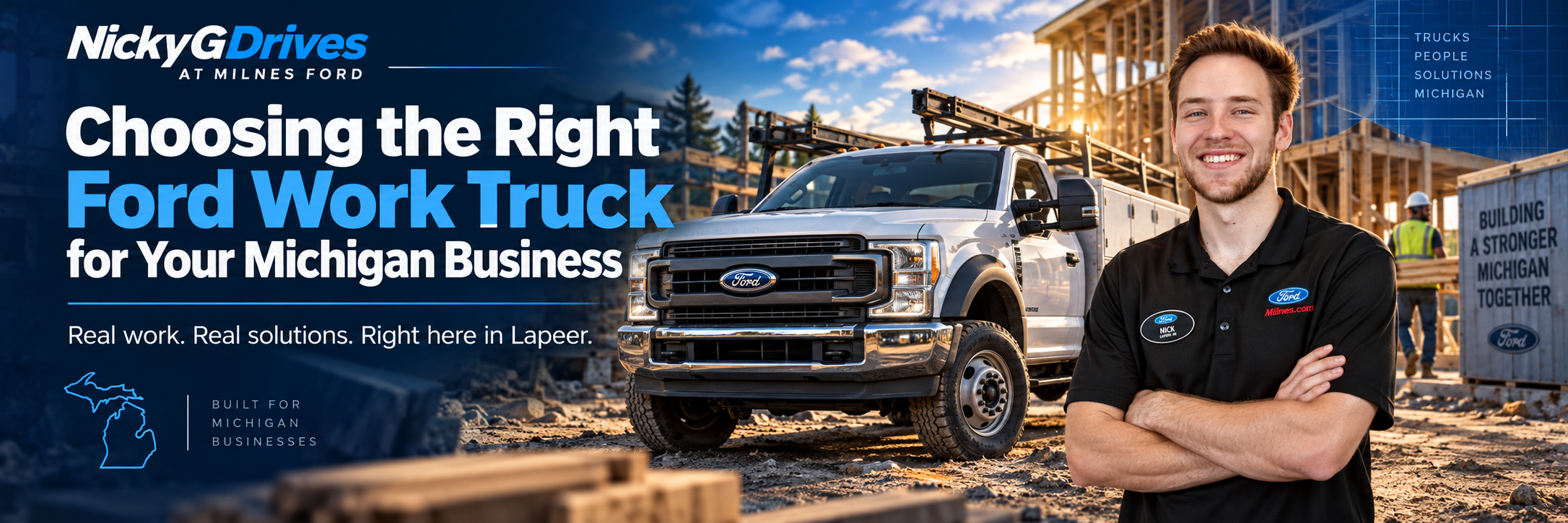
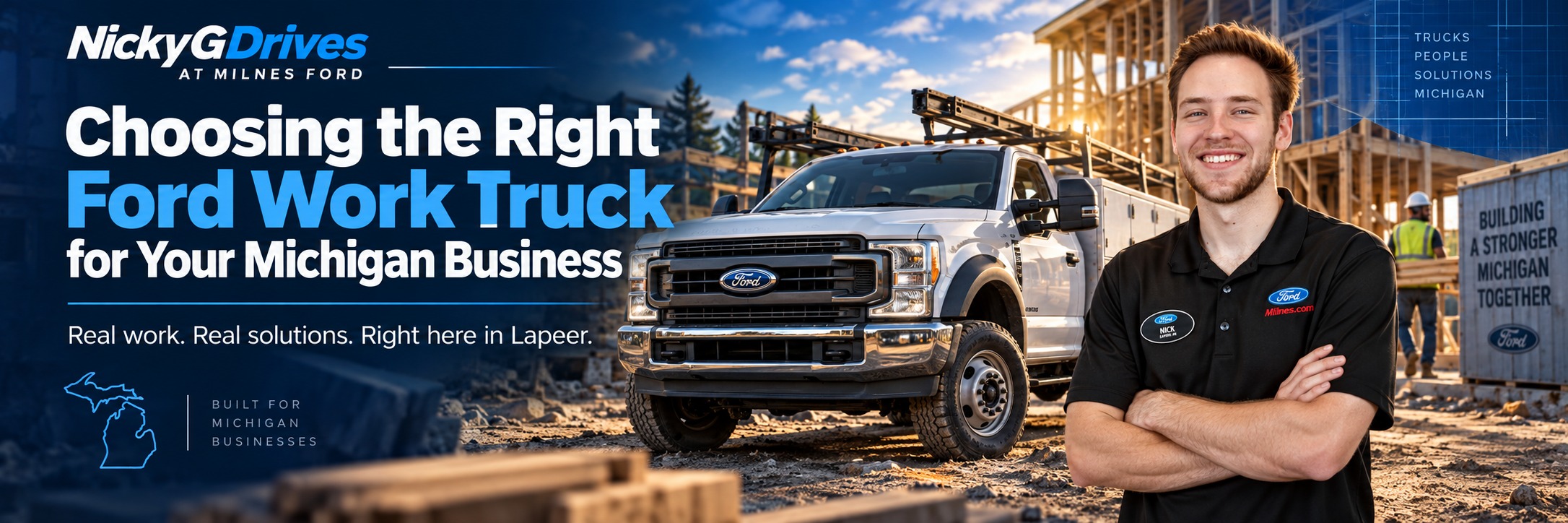
A practical buying guide from NickyGDrives, your direct connection to Nick Gutc at Milnes Ford in Lapeer.
Two truck families, different priorities
The question is not which truck is better in the abstract; it is which one fits your specific business. Some Michigan owners need a comfortable truck for appointments, light hauling and occasional towing. Others rely on heavy equipment, loaded trailers and specialized work bodies. Ford F-150 and Super Duty models can both serve commercial customers, but their strengths differ across configurations. A practical comparison starts with the work to be done, not just exterior size or horsepower claims.
Start with what you actually haul
Write down the weight of the materials, tools and equipment that ride in the truck. Include passengers and any permanently mounted boxes, racks or equipment. Then compare those needs with the payload rating of a specific vehicle. A published maximum payload applies only to certain configurations; it is not a universal number for every F-150 or Super Duty. The certification label and vehicle-specific specifications are the foundation of a sound comparison. Ask for help interpreting them if anything is unclear.
Towing is a system, not a single number
A business trailer might carry mowers, materials, tools or machinery. Its fully loaded weight—not merely its empty weight—belongs in your comparison. Hitch setup, trailer brakes, tongue or pin weight, occupants and cargo in the truck may affect the choice. Repeated heavy towing calls for different consideration than occasional lighter-duty trips. Confirm the precise vehicle and trailer combination is appropriate, including all ratings and equipment requirements, before treating an advertised tow figure as a guarantee.
Why businesses consider the F-150
For many owners, an F-150 can balance day-to-day driving with useful truck capability. It may be a good starting point when the same vehicle visits customers, carries ordinary tools, commutes and handles occasional hauling. The exact suitability depends on the chosen powertrain, cab, bed, package and ratings. Do not assume that a more expensive trim always provides greater work capacity. Focus on the attributes that affect your business first, and compare options that are actually available.
When Super Duty enters the conversation
Super Duty trucks, including F-250 and F-350 models, are important options for buyers with more demanding use cases. Those may include heavier-duty hauling, repeated towing or equipment arrangements that call for a different platform. But moving to a heavier-duty truck can also change vehicle size, driving feel, parking needs and operating expenses. It should be a considered business decision, not an automatic upgrade. Use your real workload and the exact ratings to establish whether the additional capability is necessary.
Cab, bed and maneuverability tradeoffs
A larger truck that comfortably meets your towing needs may still be inconvenient if it cannot maneuver through job sites or fit where you park. Employee seating, bed dimensions, turning needs and the number of stops each day all matter. A business that operates in residential driveways has different access constraints from one loading at open industrial facilities. Picture a complete workday: loading before dawn, parking at the first job, picking up materials and returning home. That daily experience should influence the configuration you choose.
The effect of upfits
Commercial accessories are often essential to the job, but they must be considered in the specification process. Racks, lift equipment, service bodies and tool storage can affect weight, utility and configuration. Some modifications require particular chassis or equipment. If you already know your intended upfit, share it before selecting a truck. Verify compatibility through the dealership and qualified upfit professionals; choosing first and planning the upfit later can create expensive complications.
Think about ownership, not only purchase price
A practical budget includes insurance, fuel or energy costs, service, tires, financing, equipment and expected downtime. Consider how long you plan to keep the truck and whether business requirements are likely to change. The least expensive vehicle upfront may not be the lowest-cost choice for your operation, while buying more capability than needed can also carry a cost. Your goal is a vehicle that makes operational and financial sense over time.
Let Nick help you compare specific vehicles
Nick Gutc works with shoppers at Milnes Ford in Lapeer, Michigan. Browse available commercial inventory and tell Nick what you haul, tow and carry, along with your preferred budget and timeline. He can help start the comparison between available F-150 and Super Duty choices. Call or text (810) 267-7059. Always verify specifications, pricing and availability for the specific truck with the dealership before purchase.
Frequently asked questions
Can an F-150 be a work truck?
Yes. Many businesses benefit from a versatile full-size pickup. Whether a particular F-150 fits the job depends on its certified capacity, equipment and expected workload.
Is Super Duty always necessary for towing?
No. Towing suitability depends on the loaded trailer and the exact truck configuration. A vehicle-specific comparison is essential.
What happens if I later add a toolbox or rack?
Installed accessories can change weight and usable payload. Tell the dealership about anticipated equipment up front and confirm fitment with an appropriate installer.
Explore commercial inventory, meet Nick Gutc, or contact Nick directly. You can call or text (810) 267-7059.
Review what has changed since your current vehicle
If you already own a business vehicle, compare the tasks it handles well with the frustrations you face. Maybe the cargo area is disorganized, the cab is cramped, or towing adds stress to certain routes. Sometimes a different configuration solves the problem better than switching to an entirely different vehicle category. Bring examples from real workdays, not just a broad wish list. The clearer you are about the problem, the easier it becomes to evaluate a practical solution.
Keep the purchasing conversation grounded
Specifications and availability can change, and individual vehicles on the lot may have different packages or equipment. Ask for the vehicle-specific details and clarify what is included in the quoted price. Confirm any planned equipment, financing assumptions or delivery timing in writing. The website is a helpful starting point, but the final purchase should be based on verified information from Milnes Ford and the exact vehicle you select.
Plan the first week of ownership
Think about insurance, driver familiarization, equipment storage, preventive maintenance and the time required to get the vehicle ready for work. A new truck or van is only productive when it fits into the daily operation. If you need shelving, racks or other modifications, discuss the installation timeline before committing to a specific delivery date. That reduces the chance of buying a capable vehicle that sits unused while waiting for necessary equipment.