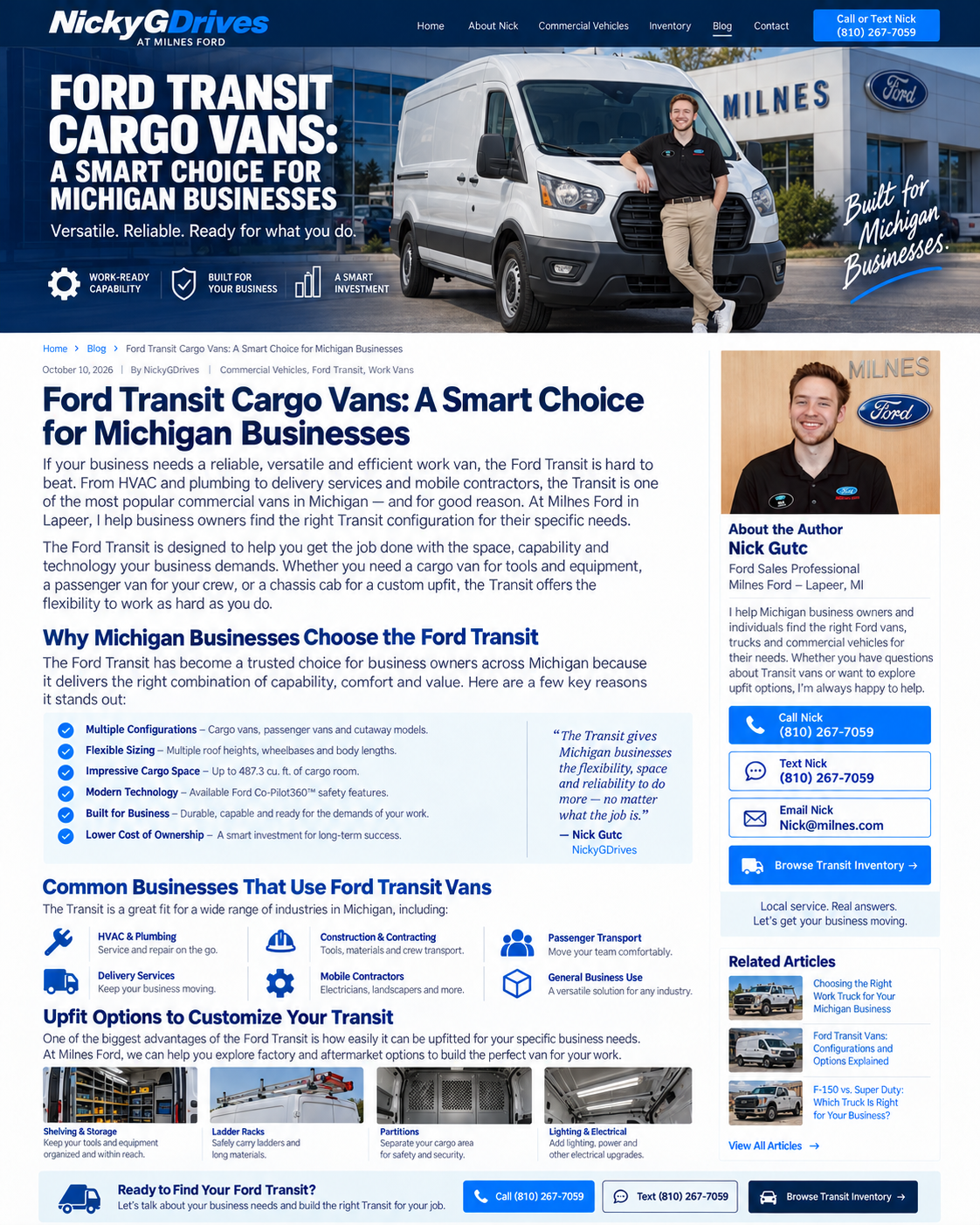
A practical buying guide from NickyGDrives, your direct connection to Nick Gutc at Milnes Ford in Lapeer.
Why a cargo van deserves serious consideration
For many service and delivery businesses, a work van is essentially a mobile workplace. The right layout can protect tools, organize parts, support daily deliveries and simplify loading at each stop. A cargo van may make more sense than a pickup when enclosed space and access to equipment matter more than an open bed. But vans are not all alike, and the right Transit configuration depends on the work you do. Think about what needs to fit inside and how your team will use the space every day before choosing a specific model or equipment package.
Start by measuring the cargo itself
Do not estimate space by looking at a photograph. Make a list of your longest, tallest and heaviest items. Include carts, ladders, packaged supplies, bulky equipment and the cases used to protect delicate tools. Measure how people will move through the cargo area and whether frequently used items can be reached without unloading everything else. Interior dimensions, door openings and usable space change across van variants. Confirm the dimensions of the exact vehicle you are considering and leave room for shelving, partitions and safe access.
Roof height, length and parking constraints
A taller roof can make it easier for people to work inside the cargo area, while a longer body may accommodate specific equipment or routes. Those benefits should be balanced against garage clearance, parking, urban deliveries, loading docks and day-to-day maneuvering. A contractor who parks at tight residential job sites may prioritize different dimensions than a delivery company that loads at a warehouse. Walk through your daily route and the places where the vehicle must fit; that practical exercise is often more revealing than choosing a configuration from a brochure.
Plan the van interior as a workflow
Shelves and bins are useful when they match the order in which work gets done. Frequently used parts should be simple to find, heavy tools need secure storage, and supplies should be kept from shifting while driving. Think about labels, lighting, electrical accessories, partitions and access from side and rear doors. An efficient layout can reduce searching and unloading time. Keep in mind that installed equipment adds weight and may affect payload; confirm the vehicle's capacity and equipment compatibility before finalizing a build.
Who uses Transit-style work vans?
Electricians, plumbers, HVAC technicians, maintenance contractors and mobile repair businesses often need enclosed storage for tools and components. Delivery businesses may care more about cargo access, organization and stop frequency. Some operations need passenger accommodation or specialized vehicle equipment. Each use case changes the priorities. A van suited to a parcel route may not be the best setup for a technician who carries heavy components, and a passenger-oriented configuration is not a substitute for a purpose-built cargo solution. Match the vehicle to the operation.
Michigan seasons and operating conditions
Winter weather, variable road surfaces and frequent short trips should influence your questions about tires, traction, vehicle care and daily use. Consider where you park at night, whether employees need early-morning access, and how temperature-sensitive equipment or materials will be stored. Review available powertrain and drivetrain choices for the specific Transit you are considering rather than assuming all vans are equipped the same way. Planning for the environment where the van works helps prevent operational surprises.
Compare buying needs with the total cost of ownership
Price is only one line in the budget. Insurance, financing, fuel, regular service, storage and any upfit installation affect the economics. Think about downtime as well: if the van is essential to reaching customers, repair scheduling and backup transportation deserve attention. If your business is growing, look at the expected workload over the next several years. You want enough utility for the work without paying unnecessarily for a configuration that is bigger or more specialized than you need.
Questions to bring to the dealership
Be ready to discuss how many stops you make, the approximate total weight of your tools and inventory, the size of the longest item, preferred loading access, and whether modifications are planned. Tell Nick about clearance limitations, where you park and your ideal timing. These details allow you to ask informed questions about available Transit vehicles rather than compare vans only by their exterior appearance. Vehicle-specific payload and dimensions should be verified before committing to a purchase or an upfit.
Explore Transit vans with Nick Gutc
NickyGDrives is Nick Gutc's personal sales website for customers working with Milnes Ford in Lapeer, Michigan. Explore available commercial vehicles on the inventory page and call or text Nick at (810) 267-7059. Explain what you carry and how you work, then confirm exact configurations, specifications, availability and pricing with the dealership before making your decision.
Frequently asked questions
Can shelving be installed in every van?
Interior equipment needs to be matched to the specific body, available payload and mounting guidance. Discuss the intended arrangement with a qualified supplier before assuming a setup will fit.
Is the biggest Transit always the best?
Not necessarily. A larger van can provide valuable space, but height, turning room, parking access and operating needs matter. Choose the smallest configuration that comfortably handles the real job.
Can I use a cargo van for several different trades?
Yes, depending on the configuration and equipment. The key is adaptable, safely secured storage and the right capacity; a setup for parcel delivery may need a different layout than one for plumbing or electrical service.
Explore commercial inventory, meet Nick Gutc, or contact Nick directly. You can call or text (810) 267-7059.
Review what has changed since your current vehicle
If you already own a business vehicle, compare the tasks it handles well with the frustrations you face. Maybe the cargo area is disorganized, the cab is cramped, or towing adds stress to certain routes. Sometimes a different configuration solves the problem better than switching to an entirely different vehicle category. Bring examples from real workdays, not just a broad wish list. The clearer you are about the problem, the easier it becomes to evaluate a practical solution.
Keep the purchasing conversation grounded
Specifications and availability can change, and individual vehicles on the lot may have different packages or equipment. Ask for the vehicle-specific details and clarify what is included in the quoted price. Confirm any planned equipment, financing assumptions or delivery timing in writing. The website is a helpful starting point, but the final purchase should be based on verified information from Milnes Ford and the exact vehicle you select.
Plan the first week of ownership
Think about insurance, driver familiarization, equipment storage, preventive maintenance and the time required to get the vehicle ready for work. A new truck or van is only productive when it fits into the daily operation. If you need shelving, racks or other modifications, discuss the installation timeline before committing to a specific delivery date. That reduces the chance of buying a capable vehicle that sits unused while waiting for necessary equipment.